Butterfly Mandala 3D SVG for Shadow Boxes Review
Evaluating Visual Depth for a Boutique Brand Launch
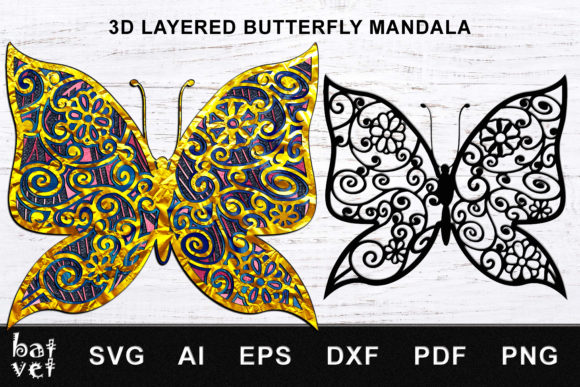
When reviewing the Butterfly Mandala 3D Layered asset for a recent client project, my primary focus was assessing its versatility beyond standard crafting. The client, a handmade skincare boutique, needed a visual anchor for their spring packaging and social media campaign that felt organic yet structured. My first impression of this graphic design asset was positive; the mandala structure provides an immediate sense of balance and symmetry, while the butterfly motif introduces necessary movement and softness. Unlike flat vector art, the layered construction suggests volume even in two-dimensional applications, making it a strong candidate for brands wanting to convey texture and care without relying on photography.
The mood created by this creative design is distinctly feminine and restorative. It avoids the chaotic energy sometimes associated with intricate patterns by maintaining clear separation between layers. For a small business branding project, this is crucial. It signals professionalism rather than amateur clutter. The asset naturally fits wellness, beauty, stationery, and event styling niches. However, as a designer, I had to verify if the technical specifications could withstand commercial production standards across both digital and physical touchpoints.
Performance Across Packaging and Digital Touchpoints
In real-world application, the Butterfly Mandala 3D Layered proved adaptable, though it requires strategic placement. For the skincare client, we utilized the individual SVG layers to create custom packaging design elements. By separating the wings from the central body, we were able to wrap the design around cylindrical bottles, creating a cohesive brand identity that felt bespoke. The high-quality AI and EPS files allowed for precise scaling on product labels without pixelation, ensuring the visual hierarchy remained intact alongside regulatory text.
For digital marketing, the included 300 DPI PNG (approximately 11.5 inches) served as an excellent hero graphic for social media graphics and Pinterest pins. The transparency was clean, allowing us to overlay the mandala onto pastel gradients and textured paper backgrounds seamlessly. We also tested the asset as a Canva template element for Instagram stories. Because the layers are distinct, we could animate them individually in video editors, adding subtle motion to static posts. This flexibility makes it a valuable digital product for content creators who need consistent thematic visuals across platforms.
While primarily marketed for Shadow Boxes and Cricut projects, the vector geometry supports broader commercial design uses. We successfully adapted the outer ring of the mandala as a decorative border for thank-you cards and shipping inserts. For print-on-demand sellers, the intricate line work translates well to t-shirt design and tote bags, provided the print method supports fine detail. Sublimation designs benefit particularly from the layering effect, as the color separation allows for vibrant, multi-tonal prints that mimic the depth of physical paper layering.
Strategic Placement: Where Detail Enhances or Distracts
Despite its versatility, the Butterfly Mandala 3D Layered demands careful spatial consideration. This asset performs best in large layout areas where its complexity can breathe. It excels as a central focal point on posters, flyers, and invitation suites. In editorial design, it works beautifully as a chapter opener or full-page background when opacity is reduced. For Etsy product listings featuring shadow boxes, this file is obviously ideal, but designers should also leverage it for shop banners and listing watermarks to maintain aesthetic consistency.
Conversely, caution is required in constrained spaces. I would advise against using the full, assembled mandala in small sizes, such as favicon icons, mobile app buttons, or dense data tables. The intricate cuts that define the 3D SVG aesthetic will merge into visual noise at low resolutions, damaging perceived quality. Similarly, avoid placing this asset over busy photographic backgrounds or complex patterns. It requires negative space to function effectively. In minimalist corporate branding or highly technical web design interfaces, the ornate nature of this illustration may clash with clean UI principles unless used very sparingly as a subtle texture.
Readability is another critical factor. When integrating this mandala into marketing visuals containing headlines, ensure sufficient contrast. The detailed edges can interfere with serif or script typography if placed too closely. During our testing, sans-serif fonts paired most effectively, providing a modern counterpoint to the traditional mandala form. Always prioritize legibility over decoration; the asset should support the message, not compete with it.
Technical Validation and Pre-Production Checklist
Before committing this design bundle to a client deliverable, professional due diligence is non-negotiable. While the description promises high-quality formats, every designer must validate files against their specific workflow. Here is the practical checklist I use when evaluating assets like the Butterfly Mandala 3D Layered for commercial viability:
- Vector Integrity Check: Open the SVG and AI files in Illustrator or Affinity Designer. Verify that paths are closed and nodes are optimized. Excessive anchor points can cause cutting machines to stutter or result in jagged print edges. Ensure layers are properly named and grouped for easy manipulation.
- Raster Quality Assessment: Inspect the PNG at 100% zoom. Check for anti-aliasing artifacts or halo effects around transparent edges. At 300 DPI and 11.5 inches, it should be crisp for print, but verify color profiles (CMYK vs. RGB) match your output needs. If converting for sublimation, test color accuracy first.
- Contrast and Accessibility Testing: Preview the design in grayscale. Does the layering still read as depth, or does it flatten into a gray blob? Ensure the asset maintains distinction on both light and dark backgrounds. This is vital for inclusive web design and accessible print materials.
- Typography Pairing Tests: Mock up the mandala with your chosen brand fonts. Test alignment with display fonts for headers and body copy for supporting text. Confirm that the visual weight of the illustration doesn't overpower essential information.
- Licensing Verification: Never assume usage rights. Scrutinize the commercial license terms specifically. Can you use it in client work? Is there a cap on physical sales? Are digital end-products permitted? Document this clearance to protect your agency and client from future liability.
- Physical Prototyping: If the project involves Shadow Boxes or laser cutting, run a test cut. Paper weight matters; cardstock that is too thin may warp, destroying the 3D illusion. Verify spacing tolerances between layers to ensure assembly is feasible for end-users or production staff.
Final Verdict for Professional Design Workflows
The Butterfly Mandala 3D Layered represents a solid intersection of craft utility and professional design potential. It transcends the typical "cute clipart" category by offering structured, editable geometry that respects modern design principles. For designers serving the handmade, wellness, and boutique sectors, it provides a cost-effective foundation for building rich, textured brand worlds. The inclusion of multiple vector formats ensures longevity and adaptability across various media, from physical sticker design to digital ad campaigns.
However, its success depends entirely on restraint and technical validation. It is not a universal solution but a specialized tool for evoking warmth, intricacy, and natural elegance. When applied with intention—respecting scale, contrast, and licensing—it elevates projects from generic to memorable. For the right client, this asset delivers significant value, bridging the gap between DIY aesthetics and polished commercial presentation. Just remember: in professional design, the asset is only as good as the judgment applied to its implementation.