Ice Truck Favor: A Designer’s 3D Papercraft Review
As a designer who constantly bridges the gap between digital assets and tangible handmade products, I approach every new file with a critical eye. When I first opened the Ice Truck Favor - 3d Papercraft files, my immediate thought wasn't just about folding paper; it was about how this charming aesthetic could translate into my embroidery workflow. While this product is technically categorized under Gift Boxes and provided as a 3D SVG for papercraft assembly, the visual architecture of an ice cream van offers incredible potential for mixed-media creators, Etsy sellers, and apparel decorators looking for unique branding or packaging solutions.
First Impressions and Visual Personality
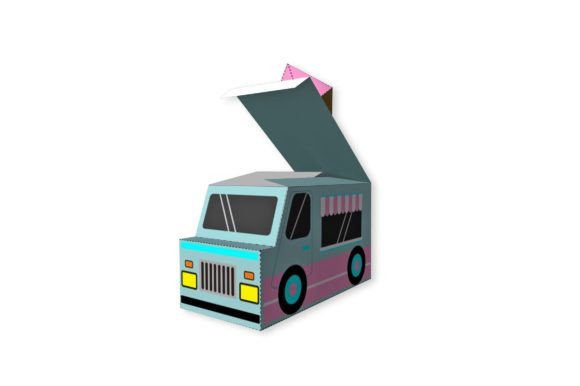
The design carries a distinct nostalgic mood that feels both playful and professional. The assembled size of 11 x 6 x 12 cm creates a substantial presence without being overwhelming. For an embroidery designer, the clean lines and recognizable silhouette of the ice cream van serve as an excellent structural reference. Even though the primary output is paper, the vector nature of the included DXF and EPS files means the shapes are mathematically precise. This precision is exactly what we look for when digitizing custom applique designs or creating embroidered patches that need to match printed packaging perfectly.
The visual personality here is high-value retail. It doesn't look like a generic clip-art truck; it has the balanced proportions necessary for a premium handmade product. Whether you are planning to stitch a matching logo onto a tote bag or use the physical paper favor as packaging for embroidered baby items, the cohesion between the 3D object and potential textile applications is strong.
Real-World Application: The Summer Boutique Collection
To truly evaluate this asset, I mentally placed it into a recent client project involving a summer pop-up shop. The client needed custom apparel and coordinated packaging. Here is how the Ice Truck Favor - 3d Papercraft performed in that conceptual workflow.
We used the digital files to create a consistent brand identity. While the paper favors were assembled using the recommended colored printer, glue, and bone folder to hold jewelry and hair clips, I utilized the same vector outlines to digitize a simplified machine embroidery design for canvas tote bags. Because the source files include EPS and DXF formats, importing the truck’s outline into embroidery software was seamless. This allowed me to create a satin stitch border around the truck shape that matched the fold lines of the paper favor exactly.
For the sweatshirt embroidery component, the truck served as a chest-sized motif. The 11 x 6 x 12 cm dimensions of the paper model provided a perfect real-world scale reference. I knew that if the design looked balanced on the physical box, a similarly proportioned fill stitch version would sit correctly on a unisex sweatshirt without distorting the garment's drape. This cross-medium consistency is vital for small shop products where brand recognition drives customer trust.
Navigating Technical Constraints and Fabric Choices
While the graphic is versatile, translating a rigid 3D papercraft aesthetic into soft textiles requires careful technical judgment. Not every fabric will support the detail level implied by this design.
- Stretchy Fabrics: If you are adapting this shape for baby embroidery or performance wear, be cautious. The geometric straight lines of an ice truck can warp on knit fabrics. You must use adequate stabilizer and consider a running stitch outline rather than a heavy satin stitch to maintain the shape's integrity.
- Textured Surfaces: On terry cloth towels or fleece blankets, the finer details of the truck (like window panes or wheel hubs) may get lost. In these cases, simplify the design to bold blocks of color. The papercraft version thrives on crisp edges; your embroidery must mimic this clarity through proper stitch density management.
- Curved Applications: Adapting this flat-vector-derived shape for caps or curved tote bag panels requires distortion correction. What looks straight in the EPS file may need manual adjustment in your digitizing software to appear straight once stitched on a curved surface.
- Dark vs. Light Backgrounds: The provided PNG files are excellent for testing contrast. Before committing thread to fabric, overlay the PNG on photos of your intended dark and light garments. An ice cream van often relies on white or pastel tones; ensure your thread colors provide enough contrast against navy or black apparel so the design remains legible.
Elevating Product Value and Customer Perception
Using Ice Truck Favor - 3d Papercraft as part of a larger ecosystem adds perceived value to finished products. In the competitive landscape of Etsy sellers and craft business owners, presentation is everything. When a customer receives an embroidered patch or personalized gift inside a professionally assembled, structurally sound 3D favor, the unboxing experience reinforces the quality of the stitching.
Furthermore, having access to the raw vector files allows for professional printable mockups. Before I even hoop fabric, I can place the PNG or EPS over a blank sweatshirt template to show clients exactly how the final commercial embroidery will look. This reduces revision rounds and builds confidence. The ability to offer a matching physical favor alongside a digital embroidery file or finished stitched good creates a unique selling proposition that generic clip art cannot match.
Practical Designer Notes for Implementation
Before you integrate this into your next embroidery project or product line, keep these practical considerations in mind to ensure professional results:
- Verify Licensing: Always confirm whether the license permits using the vectors for digitized embroidery files intended for resale. Some papercraft licenses cover physical assembly but restrict derivative digital products.
- Test Stitch Density: Since this originates as a papercraft, the lines are optimized for scoring and folding, not needle penetration. If digitizing from the DXF/EPS, adjust stitch angles to prevent fabric puckering. Paper folds forgive thickness; fabric does not.
- Assembly Time vs. Production Scale: The listed assembling time is one hour per unit. For high-volume holiday embroidery orders, factor this labor cost into your pricing if you plan to use these as packaging. Alternatively, use the design purely as a visual reference for stitching to save production time.
- Tool Compatibility: Ensure your embroidery software can cleanly import DXF or EPS files. Sometimes node counts in papercraft vectors are higher than necessary for stitching. Simplify the nodes before generating stitches to avoid jagged edges in your satin or fill stitch areas.
- Color Matching: Use the colored PDF as your master color guide. Match your thread colors to the printed paper favor to ensure that if a customer buys both the physical item and the embroidered apparel, they are visually identical.
Final Verdict for Makers and Sellers
The Ice Truck Favor - 3d Papercraft is more than just a cute container; it is a robust design asset for the serious maker. Its strength lies in its clean geometry and multi-format availability, making it a reliable foundation for both physical packaging and textile adaptation. For embroidery designers and small business owners, it offers a pathway to cohesive branding that spans from digital mockup to stitched reality. Just remember to respect the differences between paper and fabric mechanics, and this design will serve as a delightful, profitable addition to your creative toolkit.