Succulent Home Decor 7 Layer Laser Cut Review
First Impressions: Translating Digital Layers to Thread
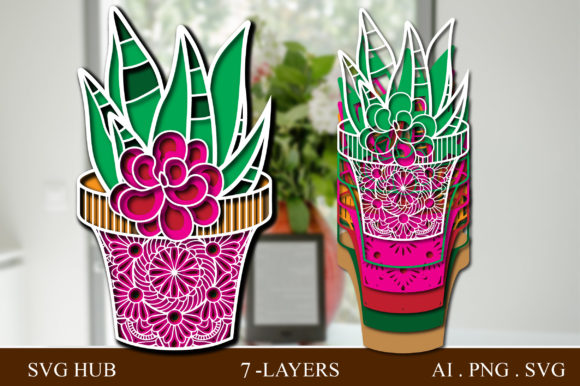
As a designer who constantly bridges the gap between digital assets and tangible textiles, my first reaction to the Succulent Home Decor 7 Layer Laser Cut file was one of cautious optimism. While this product is primarily marketed as a 3D SVG for shadow boxes and laser cutting, experienced makers know that complex layered files often hold the secret to stunning mixed-media embroidery. The visual personality of this design is undeniably modern yet organic, featuring the geometric precision of succulents softened by natural curves. For an embroidery project, this creates a unique challenge: how do we translate seven distinct digital layers into a cohesive stitched reality without creating a bulletproof patch?
The mood this design evokes is calm, botanical, and structured. It does not feel like a chaotic floral pattern but rather a deliberate architectural study of nature. This makes it an excellent candidate for contemporary home decor or minimalist apparel. However, because the original asset provides high-resolution PNGs at 300ppi with transparent backgrounds alongside vector files, my immediate thought was not just about stitching, but about using these layers as precise placement guides or applique templates. The clarity of the lines suggests that if digitized correctly, this could serve as a premium applique design foundation rather than a traditional full-coverage embroidery file.
Real-World Application: The Custom Tote Bag Test
To truly evaluate the viability of this design for commercial or personal use, I mentally prototyped a specific scenario: creating a line of premium canvas tote bags for a boutique client. Tote bags offer a relatively stable, flat surface that mimics the rigidity of a shadow box backing, making them ideal for testing multi-layer concepts. In this real-life application, I envisioned using the Succulent Home Decor 7 Layer Laser Cut vectors to cut fabric pieces via laser or vinyl cutter, then using the embroidery machine to secure and detail those layers.
In this context, the design performs exceptionally well as a hybrid media piece. The seven layers allow for depth that standard embroidery cannot achieve without excessive stitch counts. By utilizing the provided SVG paths as cutting lines and the PNGs for visual alignment, a maker can create a textured, dimensional succulent that feels high-end. For an Etsy seller or small shop owner, this approach drastically reduces stitch time compared to filling seven layers with satin stitches, thereby increasing profit margins while maintaining a luxury aesthetic. The customer reaction to such a piece is typically higher perceived value because the texture is tactile, not just visual.
However, if you intend to convert this directly into a standard machine embroidery design without physical layering, caution is required. Seven layers of digitized fill would be incredibly dense. In my assessment, this file shines brightest when treated as a blueprint for mixed media or light applique, rather than a standalone stitch file. It fits best in projects where structure matters: structured caps, heavy canvas pillows, or framed textile art that echoes its original shadow box intent.
Navigating Fabric Limitations and Technical Constraints
While the aesthetic is versatile, the technical execution requires careful consideration of your substrate. A design with seven implied layers carries significant weight. I would advise against using this on lightweight knits, sheer fabrics, or stretchy performance wear. The tension required to hold multiple layers—or the density of a converted stitch file—will likely distort thin materials. Instead, focus on stable, woven fabrics like denim, canvas, twill, or linen. These materials provide the necessary backbone to support the visual weight of the succulent motif.
When working with dark fabrics, contrast becomes your primary tool. Since the original files include transparent PNGs, you can easily test colorways digitally before committing thread. If the succulent layers are too similar in tone, the definition will be lost in the final finished product. For dark garments, consider outlining each layer with a subtle running stitch or using metallic threads to separate the planes visually. Conversely, on light fabrics, ensure your thread colors have enough saturation to prevent the design from looking washed out.
Hoop size is another critical factor. Although the exact dimensions are not specified in the product description, a seven-layer composition usually demands adequate space to maintain detail. Cramming this design into a small 4x4 hoop may force you to eliminate layers or simplify details, potentially compromising the integrity of the original art. Always verify the scalable limits of the vector files before purchasing. If you plan to use this for baby embroidery or small accessories, you may need to significantly reduce the complexity, perhaps utilizing only three of the seven layers to maintain safety and softness.
Elevating Brand Value Through Professional Execution
For creative entrepreneurs and craft business owners, the way you utilize this asset speaks volumes about your brand consistency. Using a high-quality source like Succulent Home Decor 7 Layer Laser Cut signals professionalism, but only if the execution matches the source quality. Sloppy registration marks, fraying applique edges, or poor thread tension will negate the benefits of a premium digital file. Buyers engage with products that look intentional. When this design is executed with clean edges and balanced proportions, it enhances trust and recognition.
This design also offers significant value for digital product sellers and mockup creators. The included 300ppi transparent PNGs are perfect for creating realistic printable mockups or listing photos for custom orders. Before you even stitch a single sample, you can present clients with professional previews showing exactly how the succulent will look on a sweatshirt or pillow cover. This capability streamlines the sales process and reduces waste from unapproved samples. Just remember to confirm licensing terms regarding digital redistribution versus physical end-products to protect your business legally.
Essential Designer Notes for Successful Implementation
Before loading this design into your production workflow, adhere to these practical checkpoints to ensure success:
- Test on Scrap First: Never run a new multi-layer adaptation on a final product. Test stitch density and layer alignment on scrap fabric identical to your project base.
- Verify File Compatibility: Confirm that the SVG and AI files open correctly in your specific embroidery digitizing software or cutting machine interface before starting.
- Stabilizer Selection: Given the potential density or layering, use a high-quality cut-away stabilizer for apparel and tear-away for rigid items. Consider a topping if using textured fabric to keep stitches visible.
- Thread Color Mapping: Use the provided PNGs as a direct reference for thread selection. Do not guess; match your physical threads to the digital proof to maintain design accuracy.
- Licensing Check: Explicitly review what you receive regarding commercial rights. Ensure you are cleared to sell finished embroidered goods or modified digital derivatives.
- Detail Inspection: Zoom in on the smallest curves in the vector file. If converting to stitches, ensure these areas are large enough to accommodate a satin stitch width without causing needle breaks or fabric perforation.
- Mockup Validation: Create black and white mockups to check value contrast independent of color. If the design reads poorly in grayscale, adjust your thread palette for better visibility.
Ultimately, Succulent Home Decor 7 Layer Laser Cut is a sophisticated asset that rewards thoughtful adaptation. Whether used as a guide for intricate applique, a template for mixed-media shadow boxes, or inspiration for custom digitizing, it offers a level of structural beauty that generic clipart lacks. By respecting the technical requirements of embroidery and leveraging the high-quality source files responsibly, makers can transform this digital design into a tangible bestseller that stands out in a crowded handmade marketplace.